Using real-time data to encourage consumers to recycle.
Shaping The Future of Recycling With Co-op.
Challenge
Product label space is limited and continues to shrink.
Solution
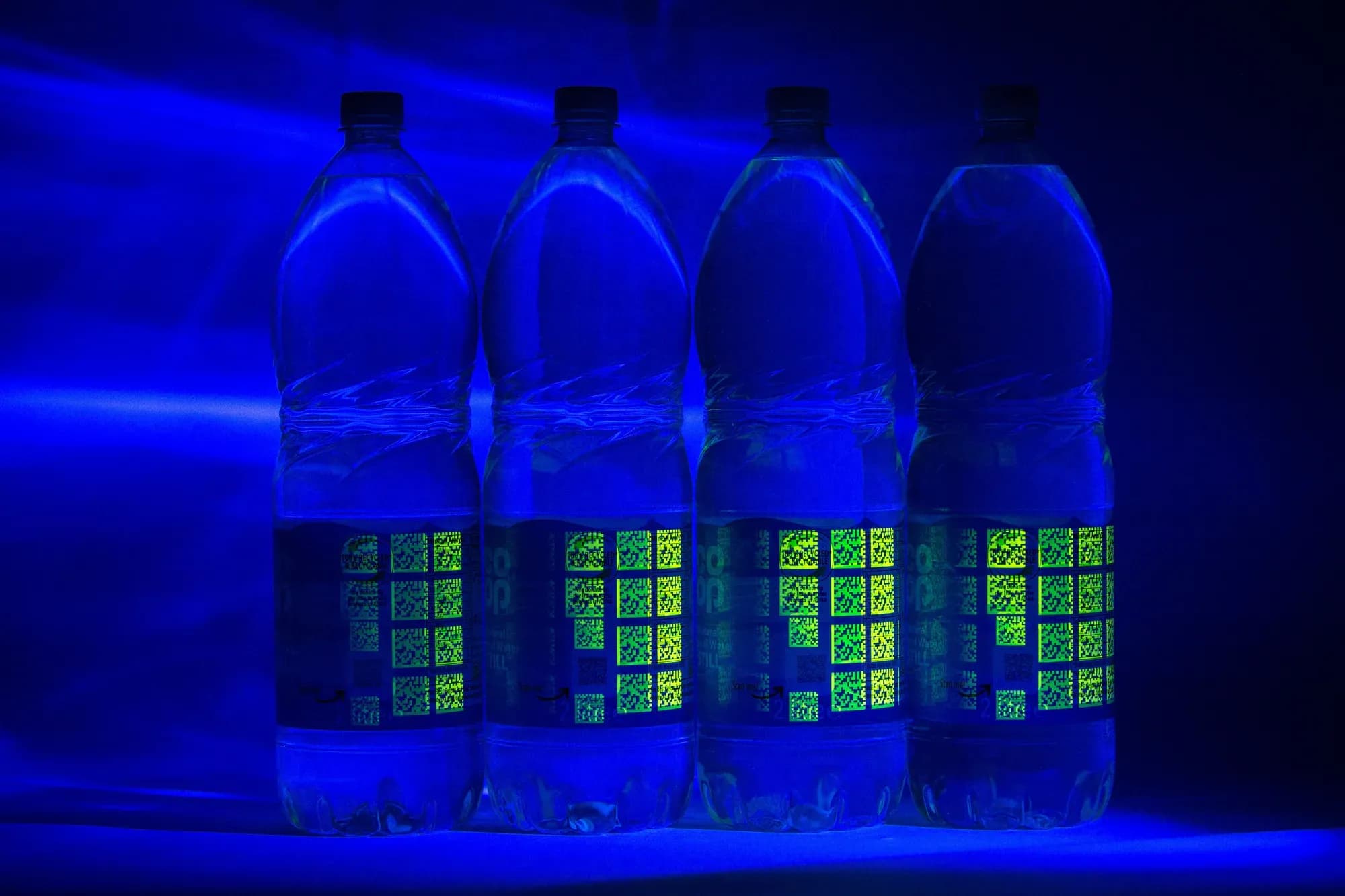
Both tags – a visible QR code, unique to each label, and invisible tags were applied to Co-op’s two-litre spring water bottles to give the retailer a new viewpoint of how their packaging was handled and disposed of by consumers and the local authority in Abergele and Teesside.
Result
Thanks to GS1 interoperability, the QR code can be read at point of sale on tills. The invisible tags have also given Co-op valuable insight into the recycling levels in the Conwy area of North Wales, with several kilos of recycling being measured.
03 — The story
Two tags. One water bottle.
Label space is limited, but the label is still the best place to talk to customers. So Co-op’s own-label two-litre spring water bottles carried both: a visible QR code, unique to each label, and an Invisible UV Tag layer printed across it. Co-op’s bottled water supplier applied the codes at standard label application speeds, with no loss to production efficiency. One tag speaks to the shopper. The other follows the bottle to the recycling centre.
04 — The experience
A Co-op page, one scan away.
Scanning the GS1-compliant QR code opens a Co-op landing page on the retailer’s sustainability and charitable commitments. On the Polytag dashboard, Co-op can see at IP address level where each pack was scanned.
Features: unique-every-time codes · scan locations

05 — Platform
Built with.
On the phone
Unique-every-time QR codes
A visible GS1-compliant code, unique to each label, on labels printed by Tipografic and applied at standard line speeds.
Landing page
A Co-op page on the retailer’s sustainability and charitable commitments.
Scan locations
Where each pack was scanned, at IP address level, on the Polytag dashboard.
Read at the till
Thanks to GS1 interoperability, the same code can be read at point of sale.
At the line
Invisible UV Tags
A UV Tag layer printed across the label, invisible to the human eye.
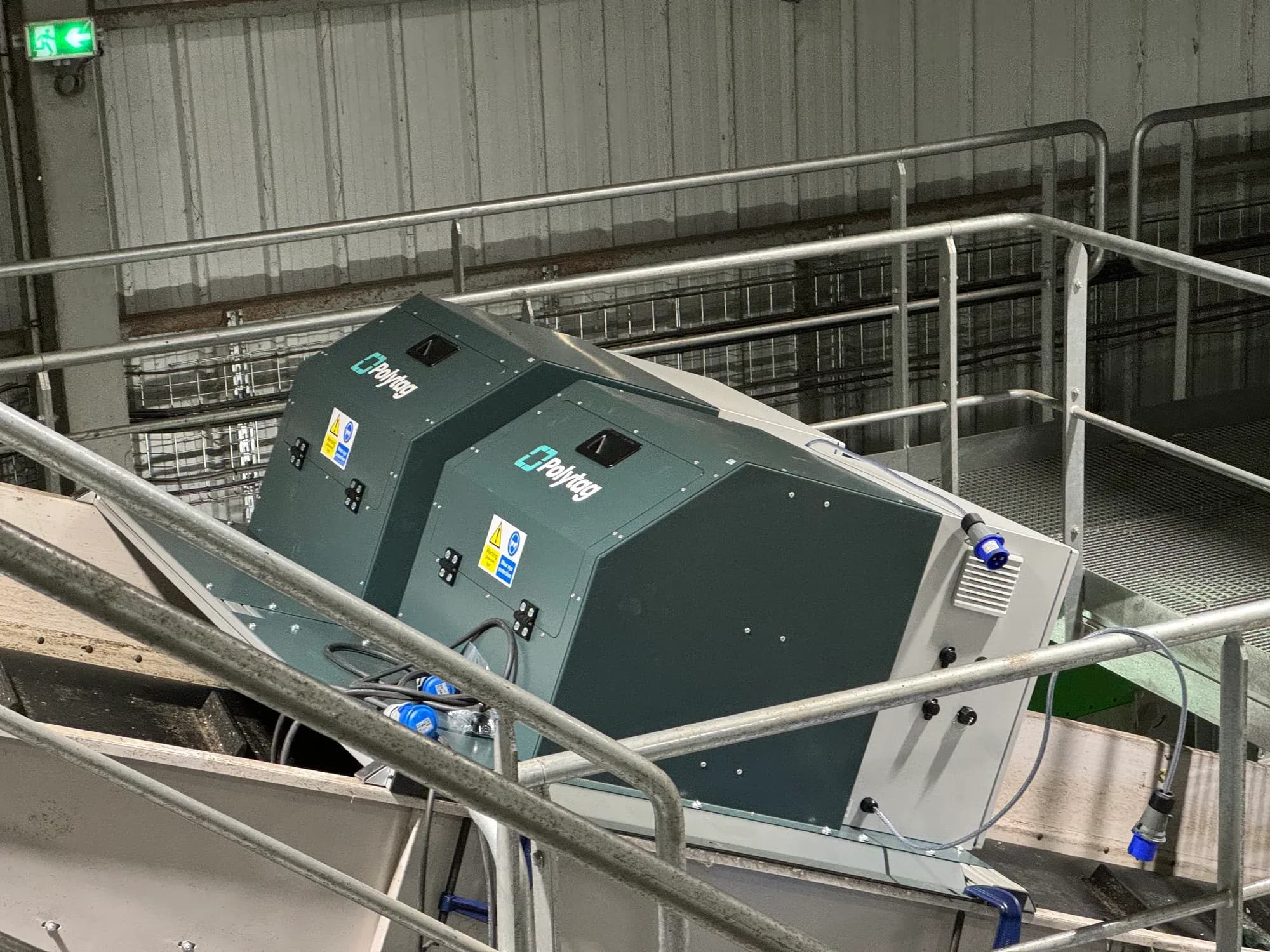
UV tag reader
Fitted to the plastics conveyor at Abergele’s Gofer Bulking Centre.
Recycling dashboard
Real-time data on whether packs are recycled, and in what volumes.
Product label space is limited and continues to shrink—our invisible UV QR tags can be applied to packaging without loss of label space. These tags are invisible to the human eye and customers do not know they are there—but they allow brands to accurately track recycling of their products for the first time.
At the same time, the label remains the best place to directly interact with consumers. By applying unique-everytime QR codes on the bottling line, we have been able to improve the customer experience by opening up a webpage at the tap of a button.
Both tags – a visible QR code, unique to each label, and invisible tags were applied to Co-op’s two-litre spring water bottles to give the retailer a new viewpoint of how their packaging was handled and disposed of by consumers and the local authority in Abergele and Teesside.
Results
Through Polytag initiatives, brands, retailers and governments can unlock insightful information on how packaging is disposed of and recycled using GS1-approved global standards and tag formats.
Connected packaging allows brands access to packaging traceability, and consumption patterns of Co-op’s products; on the Polytag dashboards, Co-op can see at IP address level where the packaging was scanned by a customer’s phone.
The technology we used is accessible and low-cost to implement, and Polytag’s platform is fully scalable.
Thanks to GS1 interoperability, the QR code can be read at point of sale on tills. The invisible tags have also given Co-op valuable insight into the recycling levels in the Conwy area of North Wales, with several kilos of recycling being measured.
The duality of the UV tag and QR code on our water bottles will enable Co-op to gain a greater understanding on a product’s journey in the recycling chain and provide valuable insight to shape guidance and measurement for future initiatives to encourage more people to recycle.