The Label That Pays for Itself: How UV Technology Is Reshaping FMCG Packaging
Extended Producer Responsibility regulations are tightening, consumers demand proof of sustainability, and retailers need hard data to manage compliance costs.

The FMCG sector is at a crossroads. Extended Producer Responsibility regulations are tightening, consumers demand proof of sustainability, and retailers need hard data to manage compliance costs. For too long, the industry has lacked a clear connection between what goes into recycling bins and what actually gets recycled.
That’s changing.
Our recent collaboration with Interket UK demonstrates how Invisible UV Tags are providing FMCG brands with something they’ve never had before: a direct, verifiable link between packaging, recycling performance, and financial outcomes.
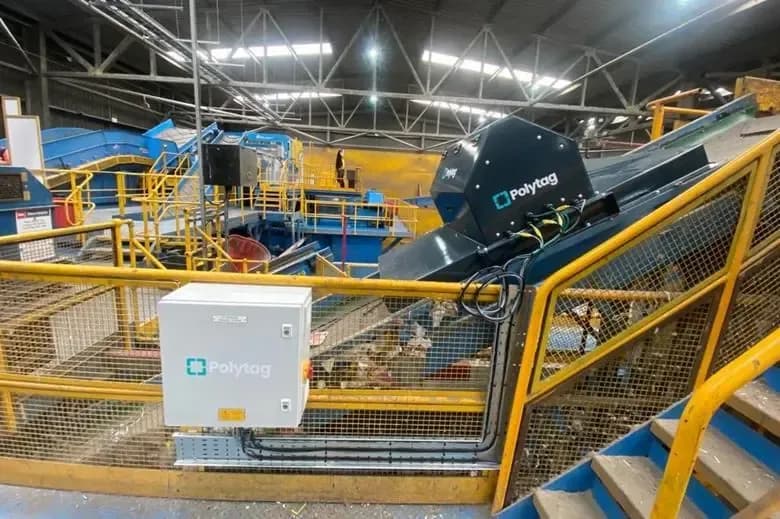
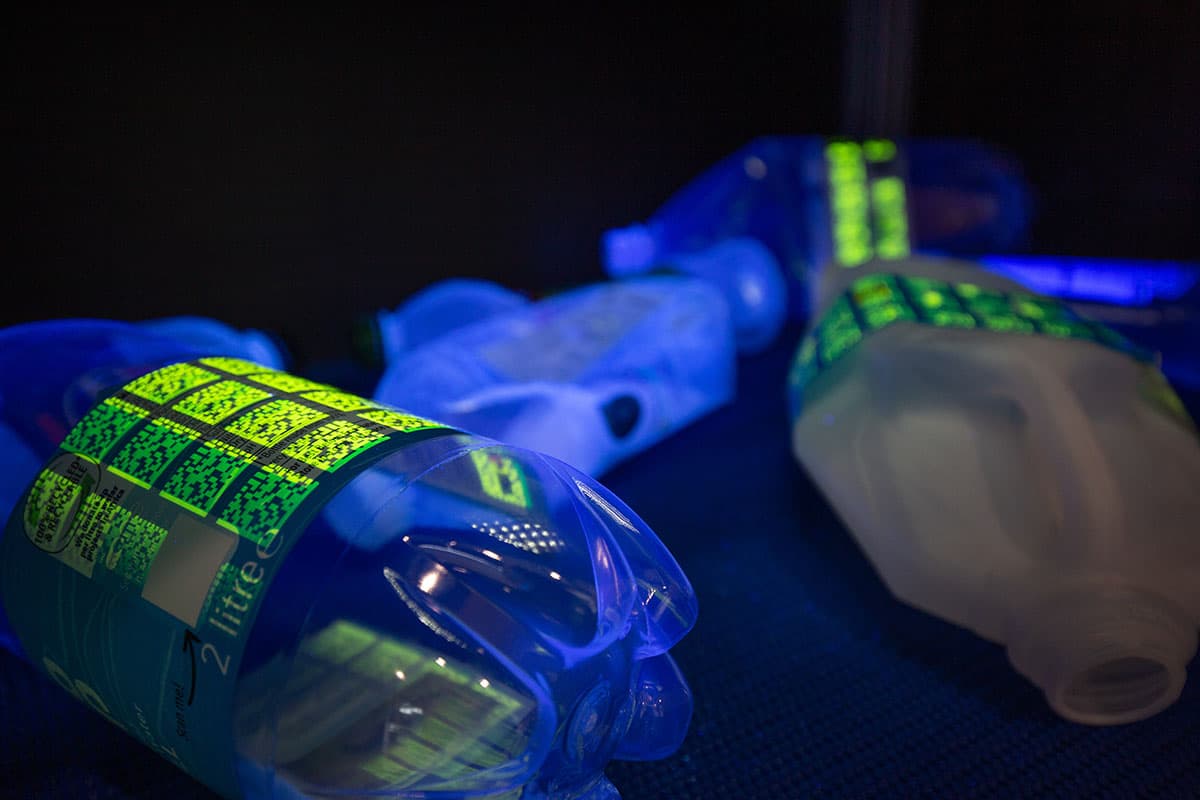
As detailed in Circular Online, this technology works by embedding invisible-to-the-eye data matrices into product labels that can be detected at material recovery facilities. Every item becomes traceable, giving retailers concrete evidence of what’s being collected and processed. For the first time, brands can demonstrate recycling performance with data, not estimates.
The early deployments with major retailers like Ocado and M&S in high-volume dairy have validated the approach. But the potential extends far beyond milk bottles to the entire spectrum of bottled, jarred, and carton-based products across FMCG.
What makes this particularly timely is EPR. As regulations evolve to require evidence-based reporting, brands equipped with UV-readable labels will be positioned to potentially reduce their EPR fees while building consumer trust through transparency. The initial investment in changing labels could ultimately be offset by long-term regulatory savings.
Getting here required solving challenges around ink density, substrate compatibility, and sensor reliability at industrial scale. But the result is a solution that’s already operational, proven in real-world conditions, and ready to scale.
The brands that act now won’t just be better prepared for compliance. They’ll be positioned to turn packaging into a strategic asset, creating measurable value from the circular economy rather than simply responding to regulatory pressure. The technology exists. The infrastructure is being deployed. Change can happen now.