Learn about our collaboration with Pellenc ST.
How sortation is shaping recycling data
Challenge
Advanced sortation is the linchpin of a high-functioning recycling system. Without it, even the best packaging design and collection schemes will fall short.
Solution
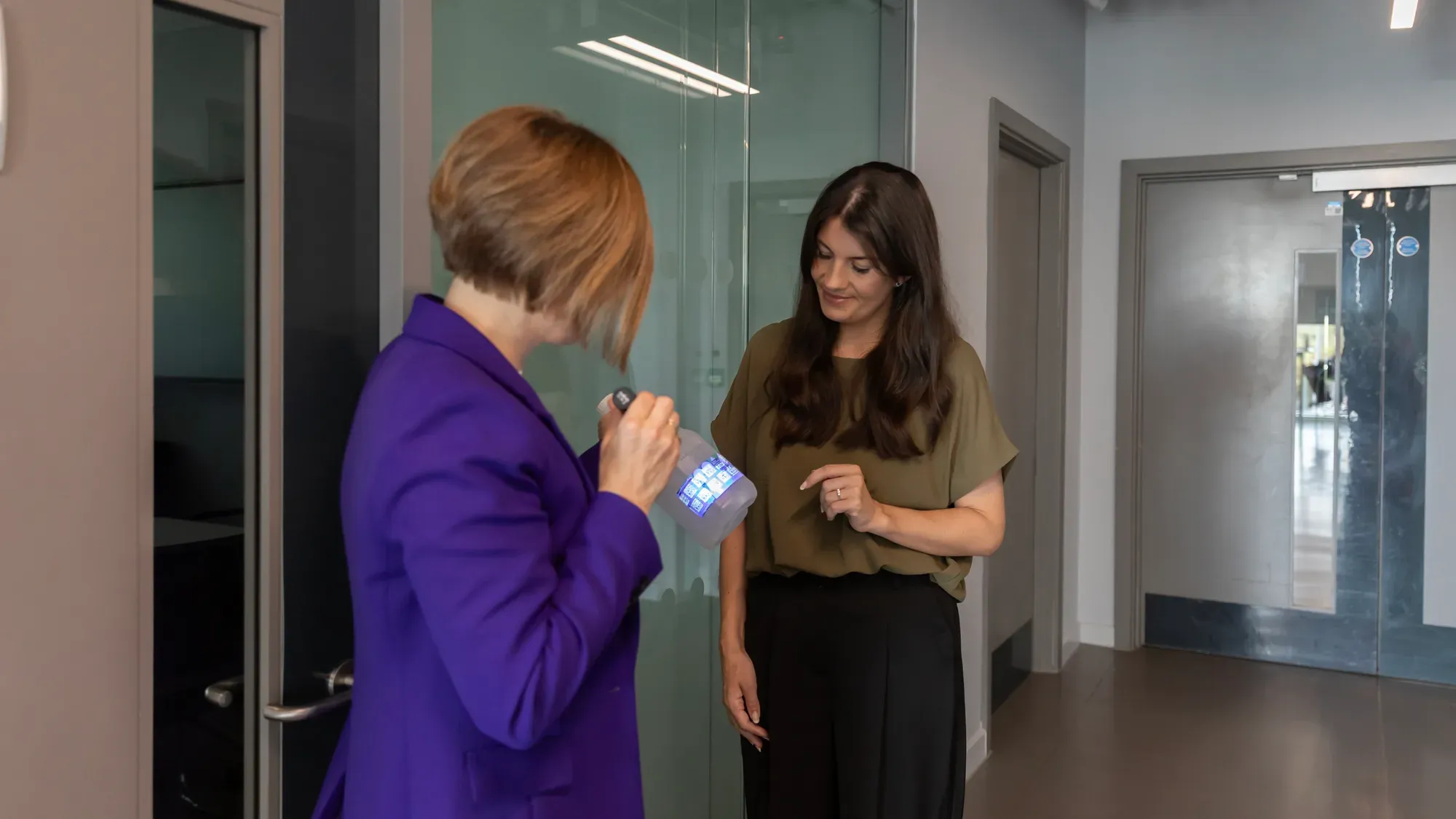
By combining near-infrared (NIR) spectroscopy with our UV watermarks, Pellenc ST’s systems can now sort packaging not just by polymer type, but by food-grade status, material type and even brand ownership.
Result
UV detection technology is proven, with 100% of tagged single-use plastic bottles tracked and traced by Citeo at one of France’s busiest MRFs.
03 — The story
Sorted by brand, not just by polymer.
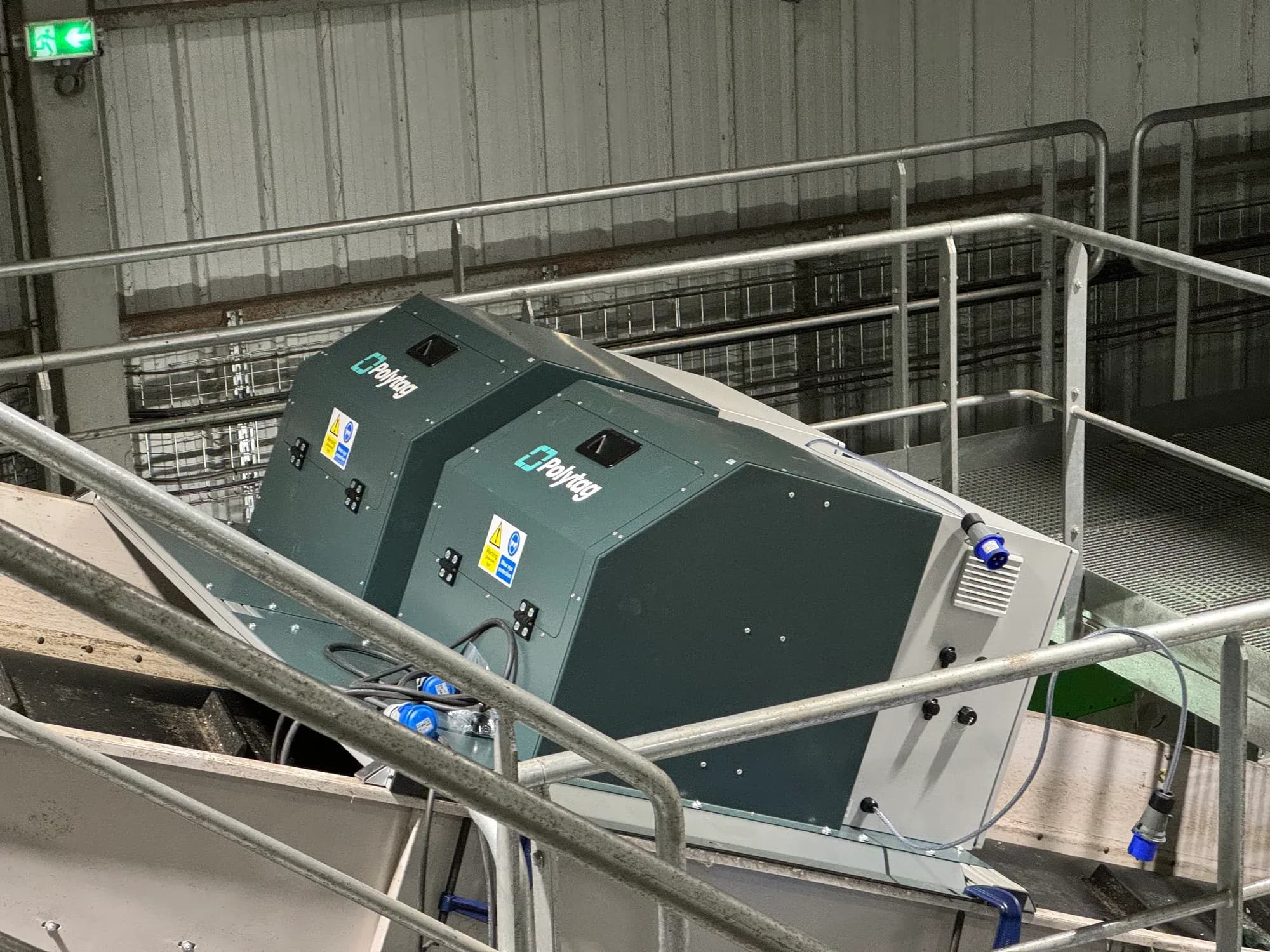
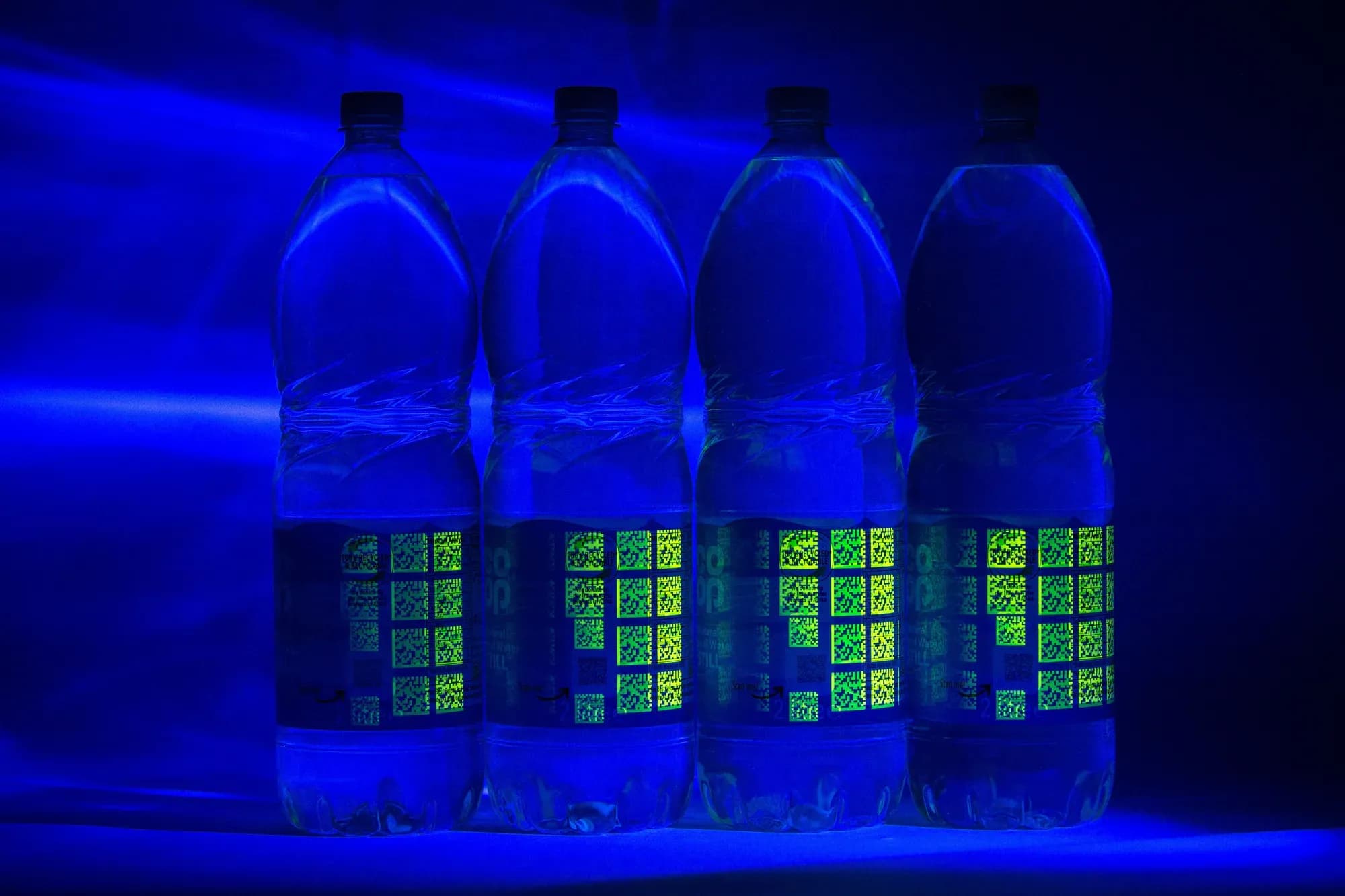
Pellenc ST designs and manufactures intelligent sorting and quality control systems for the waste and recycling industry. The partnership pairs its near-infrared sorting with Polytag’s invisible UV watermarks, GS1-standard data matrices printed onto packaging. As each item enters the facility, a detection unit captures its data, so packaging can be sorted by food-grade status, material type and even brand ownership. The sorting prototype has been validated to TRL 7 at Pellenc ST’s Innovation Centre.
04 — Platform
Built with.
Invisible UV watermarks
GS1 open standard data matrices, printed onto the packaging.
Detection units
Capture the data from every UV-watermarked item that enters the facility.
NIR + UV sortation
Sorts by polymer, food-grade status, material type and brand ownership.
Barcode-level data
Smart data at barcode level, tracked from MRF to recycler.
05 — The numbers
Of tagged single-use plastic bottles tracked and traced by Citeo at one of France’s busiest MRFs.
Citeo testing, 2025
Sorting prototype validated at Pellenc ST’s Innovation Centre.
Polytag and Pellenc ST, 2025
We are proud to announce our partnership with Pellenc ST. By combining our UV watermarks with world leading sortation technology, we have achieved a milestone moment in the recycling industry, which will mark the end of downcycling and the start of optimised and value-driven plastics recycling.
The integration of Polytag UV watermark technology – based on GS1 open standard data matrices – with Pellenc ST’s advanced sortation systems, will enable real-time tracking and optimisation of packaging waste through the recycling process from materials recovery facility (MRF) to recyclers.
This means that detection units within a MRF can capture associated data from every UV watermarked item that enters a facility, providing recycling facilities with new capabilities to detect and sort waste streams.
Transformational Impact
Ultimately, by embedding smart data at barcode level directly into packaging materials, we are empowering waste management companies and brand owners with ‘unprecedented’ control of the recycling journey of their products.
This isn’t a pilot project – it’s real proof that collaboration will drive the change needed in our recycling system. And it shows that when stakeholders align around open standards, shared data, and common goals, the results can be transformational.
Advanced sortation is the linchpin of a high-functioning recycling system. Without it, even the best packaging design and collection schemes will fall short. That’s why our partnership with Pellenc ST is so significant.
By combining near-infrared (NIR) spectroscopy with our UV watermarks, Pellenc ST’s systems can now sort packaging not just by polymer type, but by food-grade status, material type and even brand ownership. This level of precision opens the door to true closed-loop recycling and will reduce downcycling of plastics.
UV detection technology is proven, with 100% of tagged single-use plastic bottles tracked and traced by Citeo at one of France’s busiest MRFs. Polytag’s detection units are already in play at MRFs around the UK, and by integrating with Pellenc ST’s systems, we are already in a position to redefine the future of sortation.
Open standards are critical to implementing digital product passports. Our collaboration with Polytag equips recycling facilities with the tools they need to optimise material recovery and support the transition to a circular economy.