GS1 UK case study (2023)
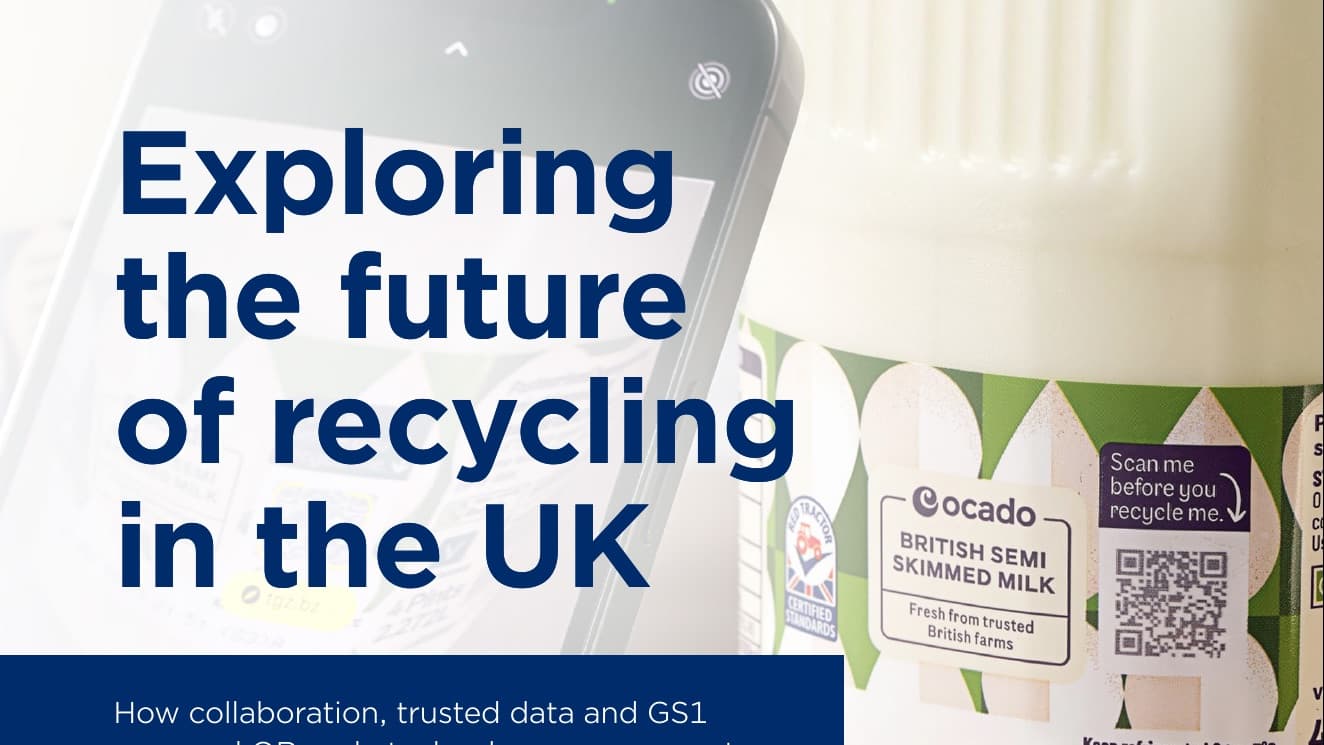
Exploring the future of recycling in the UK
How collaboration, trusted data and GS1 powered QR code technology can support the implementation of sustainability agendas.
The move towards Deposit Return Schemes means many drinks brands already face an unavoidable packaging artwork change. That creates a useful moment to think beyond compliance and turn an updated pack into a more valuable consumer touchpoint.
Deposit Return Schemes (DRS) are changing not only how drinks containers are collected and recycled, but also what brands need to consider on-pack.
For the UK scheme covering England, Scotland and Northern Ireland, Exchange for Change has been appointed to administer the DRS ahead of its launch on 1 October 2027. Producers of in-scope drinks containers will need to register with the scheme, with registration taking place in phases ahead of launch. Source: Exchange for Change
One of the important preparations for DRS is ensuring that in-scope containers can be correctly identified within the scheme. Brands should therefore plan for the registration of their products and associated container information with the relevant scheme administrator as part of their DRS readiness programme.
Packaging artwork also needs attention. Exchange for Change has confirmed that its DRS logo must be clearly displayed on every in-scope container, with requirements covering its size, clear space, orientation, colours and production. The logo requirements become mandatory from 1 October 2027. Source: Exchange for Change
For many brands, this means artwork is going to change anyway.
An artwork update shouldn’t just be viewed as another compliance exercise. It is an opportunity to make the packaging work harder for the brand.
By introducing a Smart QR Code, generated and managed through a Polytag brand account, brands can transform an in-scope container into a new digital communication channel.
One scan can take the consumer to a barcode-level digital experience where brands can:
Because the experience operates at barcode level, different products can provide different information and experiences. Rather than sending every consumer to the same generic sustainability webpage, brands can create a much more relevant journey connected to the product actually in their hand.
And while the printed Smart QR Code remains the same, the destination experience can evolve. Messaging, campaigns, recycling information and calls to action can be updated in real time through Polytag, turning packaging from a static piece of artwork into an ongoing communications channel.
DRS is forcing packaging to change. The opportunity for brands is to use that change to create something more valuable.
Further reading
How collaboration, trusted data and GS1 powered QR code technology can support the implementation of sustainability agendas.
More legislation guides
ESPR
EU · phased in until summer 2026
Ecodesign for Sustainable Products Regulation
ESPR is a cornerstone of the EU’s Circular Economy Action Plan.
In forceEPR
UK · live as of 2025
Extended Producer Responsibility
EPR policies exist globally, including in the EU, UK, Canada, Australia and the US.
In forcePPWR
EU · in force since February 11, 2025
Packaging and Packaging Waste Regulation
The PPWR is central to the European Commission’s circular economy agenda.
AdoptedSB54
California · targets by 2032
Plastic Pollution Prevention and Packaging Producer Responsibility Act
Designed to shift the financial and operational burden from local government to companies that produce packaging.